


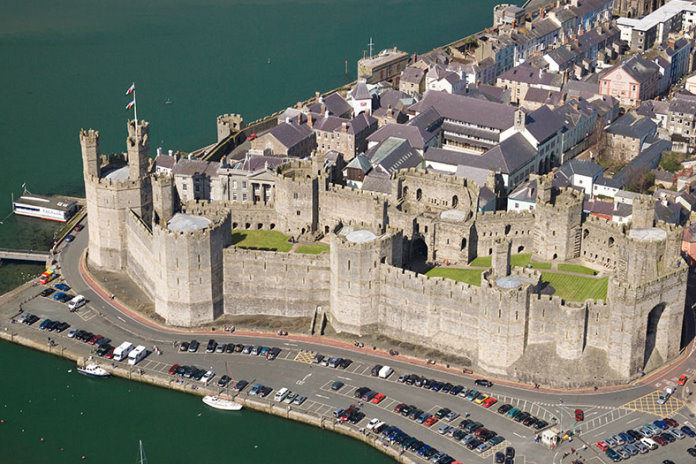


Caernarfon Castle, one of Europe’s great medieval fortresses and is located in the town of Caernarfon in North Wales, UK. Its history, architecture, and significance make it an important symbol and attraction. Here are some key aspects and facts about Caernarfon Castle:
- Historical Significance: Caernarfon Castle was primarily built in the 13th century by Edward I as part of his campaign to conquer Wales. The castle was a demonstration of English power and authority in the region.
- Architectural Features: The castle is known for its unique polygonal towers, rather than the more traditional round ones. The Eagle Tower, in particular, is a standout feature of the castle and is adorned with stone eagle sculptures.
- Symbolic Design: Some historians believe that the design of Caernarfon Castle was influenced by the walls of Constantinople, as Edward I may have wanted to associate his castle with the Roman Empire’s imperial history.
- World Heritage Site: In 1986, Caernarfon Castle, along with several other castles and town walls in the region, was designated as a UNESCO World Heritage Site due to its historical and architectural importance.
- Investiture of the Prince of Wales: In modern times, the castle is known for being the site of the investiture of the Prince of Wales. The most recent and notable of these was the investiture of Prince Charles in 1969.
- Visitor Attraction: Today, the castle is open to the public and is managed by Cadw, the historic environment service of the Welsh Government. Visitors can explore the towers, walls, and chambers of the castle, as well as learn about its history through exhibits and displays.
- Caernarfon Town: The castle dominates the landscape of the town of Caernarfon. The town itself has its origins as a Roman fort and has a rich history that predates the castle. The town walls, also built during Edward I’s reign, are well-preserved and can be explored by visitors.
If you plan to visit Caernarfon Castle or are simply curious about its history, there’s much to discover and appreciate about this iconic structure.
Caernarfon Castle, as a major tourist attraction managed by Cadw, offers a range of facilities and amenities to cater to the needs of its visitors. While specific facilities might evolve over time, as of my last training data in September 2021, the following are some of the facilities typically available for visitors:
- Information Centre: Upon entering, visitors usually find an information desk or centre where they can get details about the castle, its history, guided tour timings, and any special events happening on the day.
- Gift Shop: Most heritage sites managed by Cadw, including Caernarfon Castle, feature a gift shop. Here, visitors can purchase souvenirs, guidebooks, postcards, and other memorabilia related to the castle and Welsh history.
- Audio Guides: Some historical sites offer audio guides, which allow visitors to take a self-guided tour at their own pace while listening to detailed commentary about the castle’s history and architecture.
- Exhibitions: Various rooms and chambers within the castle might host exhibitions. These can include historical artefacts, interactive displays, and information panels detailing various aspects of the castle’s past.
- Toilets: Facilities including toilets, including those for disabled visitors, are generally available on-site for visitor convenience.
- Disabled Access: While historic buildings like Caernarfon Castle can have limitations due to their age and preservation needs, efforts are usually made to provide access for visitors with mobility issues. It’s a good idea to check ahead or inquire at the information desk about specific areas that are accessible.
- Guided Tours: Depending on staffing and the time of year, guided tours might be available. These are led by knowledgeable guides who can provide in-depth insights into the castle’s history and answer any questions visitors might have.
- Refreshments: Some larger heritage sites might have a café or a small eatery on-site or nearby where visitors can get refreshments, snacks, or meals.
- Picnic Areas: Some castles and historical sites offer picnic areas where visitors can relax and have their own packed meals.
- Parking: While Caernarfon Castle is centrally located within the town, there are public car parks nearby that visitors can use.
- Educational Facilities: For school groups or educational visits, there might be dedicated resources or activities. It’s advisable to book in advance for such group visits.
Before visiting, it’s always a good idea to check the official website or contact the castle directly for the most up-to-date information on available facilities and any special events or restrictions that might be in place.
Booking.com
(function(d, sc, u) {
var s = d.createElement(sc), p = d.getElementsByTagName(sc)[0];
s.type = ‘text/javascript’;
s.async = true;
s.src = u + ‘?v=’ + (+new Date());
p.parentNode.insertBefore(s,p);
})(document, ‘script’, ‘//aff.bstatic.com/static/affiliate_base/js/flexiproduct.js’);
Opening Hours 2016 – 2017
Last admission half an hour before closing.
1st March to 30th June – 09.30 – 17.00 daily
1st July – 31st August – 09.30 – 18.00 daily
1st September – 31st October – 09.30 – 17.00 daily
1st November to 28th February 10.00 – 16.00 Monday to Saturday – 11.00 – 16.00 Sunday
Closed:- 24th, 25th, 26th December, 1st January
Contact and Admission Information
Telephone:- +44 1286 677617
Admission Charge:-
Adults £7.95, Reduced rate £5.60.
Family Ticket:- £21.50 – admits 2 adults and up to 3 children under 16 years.
Three or seven day explorer passes are available to give you free admission to the historic sites in the care of Cadw.
(adsbygoogle = window.adsbygoogle || []).push({});